Available for select projects · 2026

01 / Character CamRealtime AI · Native Windows · Electron

Reality,re-routed.

A live camera feed, transformed in real time, delivered to Windows as an ordinary camera device.

Scroll ↓
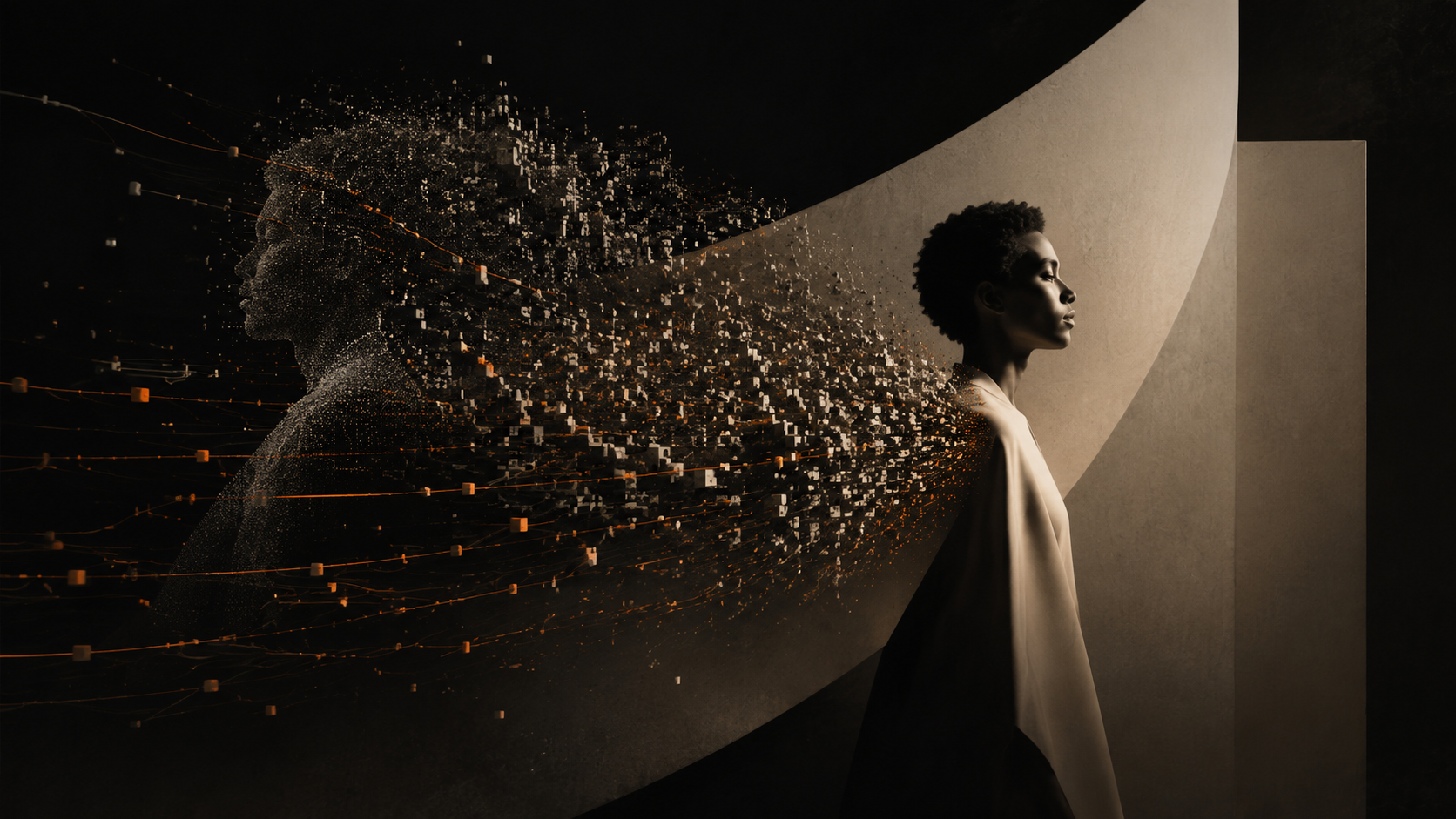
Conceptual artwork: a raw camera profile dissolving into a synthetic transformed presence
00 / THE PROBLEM

A transformed frame is not a camera.

Generative models can already turn a face into a character in real time. Communication software has no idea what to do with that output. Zoom, Discord and Meet only know how to ask Windows for a camera device — they cannot accept a MediaStream from another application.

The central systems challenge was not generating a transformed frame in isolation. It was carrying that result through a continuous frame pipeline and presenting it to Windows as a camera device that existing communication software could understand.

01 / THE SYSTEM

One stream, two destinations.

The transformed video in Character Cam's own preview is the exact same stream Windows exposes as a camera. Nothing is duplicated, and nothing is captured from the screen.

WebcamgetUserMedia captures the raw feed.Decart Lucy 2.5A realtime WebRTC session returns the transformed stream.Frame extractionMediaStreamTrackProcessor reads VideoFrames and converts to I420.Process boundaryFrames cross into Electron's main process, then shared memory.Media FoundationA native addon calls Windows' MFCreateVirtualCamera.CharacterCamSource.dllA COM media source Windows loads into each consuming app.“Character Cam”The resulting selectable camera device — see the evidence and honest boundary below.
02 / DECISIONS

What mattered.

// DECISION

A camera the OS believes in

The implementation uses Microsoft's native Media Foundation virtual-camera API rather than presenting the transformed stream only inside the Electron interface. The OS-level camera boundary makes Character Cam available to compatible applications as a selectable Windows camera source.

// DECISION

One session, however many consumers

The frame pipeline reads off the exact MediaStream the in-app preview already uses. Connecting or disconnecting an external application never opens a second Decart session.

// DECISION

Frames cross a boundary, not a shortcut

MFCreateVirtualCamera's media source is a COM DLL that Windows loads inside the Frame Server and inside each consuming application — never inside Electron. Frames reach it through a shared-memory ring buffer built for that boundary.

03 / VERIFIED EVIDENCE

Proof, not a render.

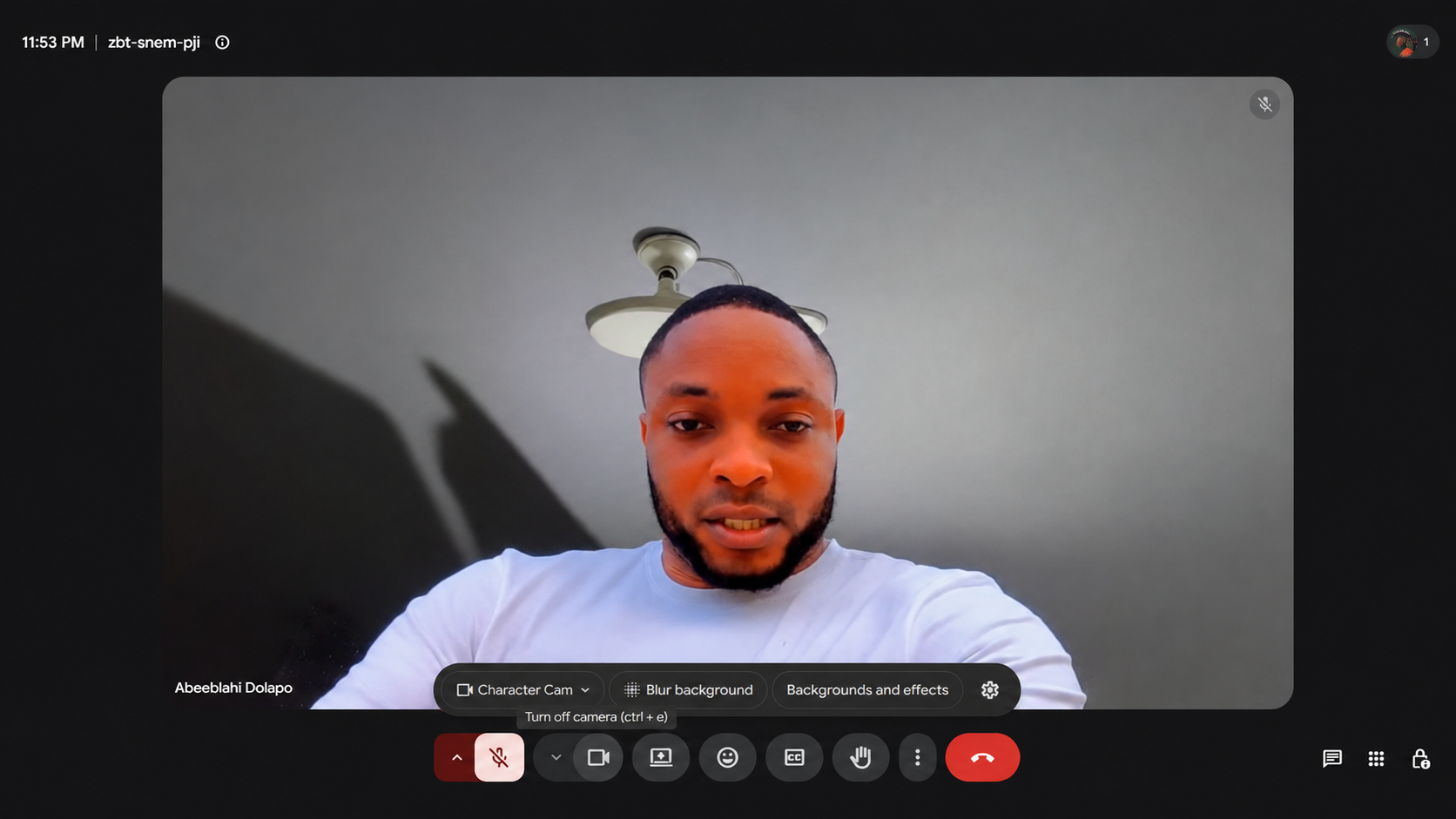
Google Meet call window with the camera-source dropdown reading Character Cam, showing the live transformed character as the call video

Google Meet's own camera picker, reading “Character Cam” next to the built-in webcam. The transformed character is the live call video, not a preview window running alongside it.

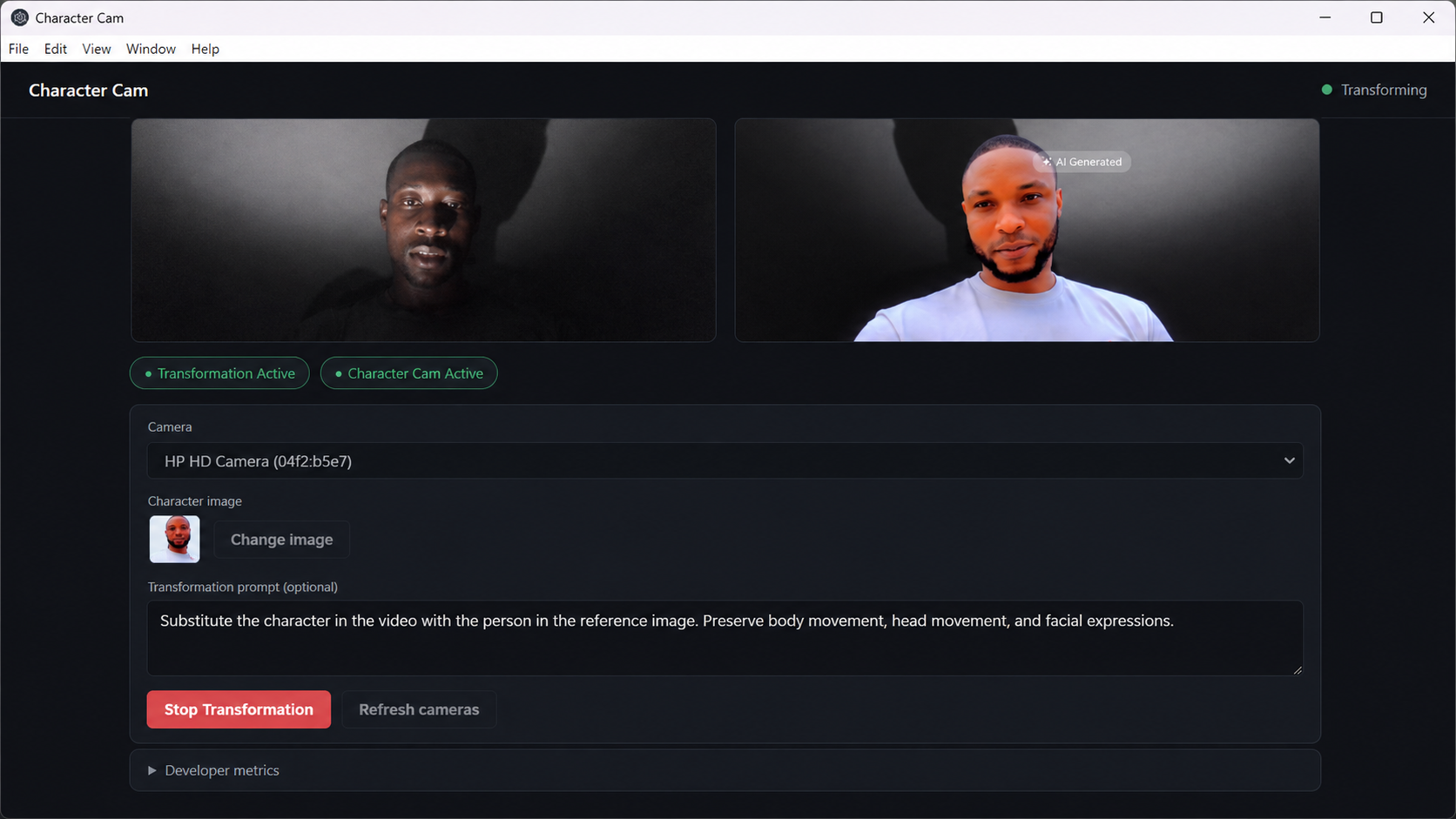
Character Cam desktop app showing the raw camera feed and the AI-transformed character side by side, with camera and character controls below

The in-app workspace. Raw input on the left, the transformed character on the right, camera and character selection below.

04 / HONEST BOUNDARY

What's confirmed, and by what.

Confirmed in the shipped architecture

  • Electron + React desktop app with a real-time transformation preview
  • A native Windows layer built around Media Foundation's virtual-camera API
  • A frame pipeline carrying the exact transformed stream, with no screen capture and no duplicated AI session
  • Production packaging and installer work

Verified by the founder, in Google Meet

  • Compilation against the genuine Windows 11 Media Foundation SDK
  • Real execution of MFCreateVirtualCamera
  • End-to-end frame delivery into a real Windows camera device
  • “Character Cam” selected and used as the call camera inside Google Meet

Not yet validated

  • Zoom
  • Discord
05 / RESEARCH FRONTIER

What comes next.

Two newer generative models are being evaluated for a future transformation engine. This is experimental evaluation only — neither is part of the demonstrated Google Meet workflow, and neither is presented as commercially deployable today. Daydream Scope's current licensing also limits commercial use.

Daydream Scope — experimentalStreamDiffusionV2 — experimental
06 / NEXT

The interface was never the hard part.
The system underneath it is.